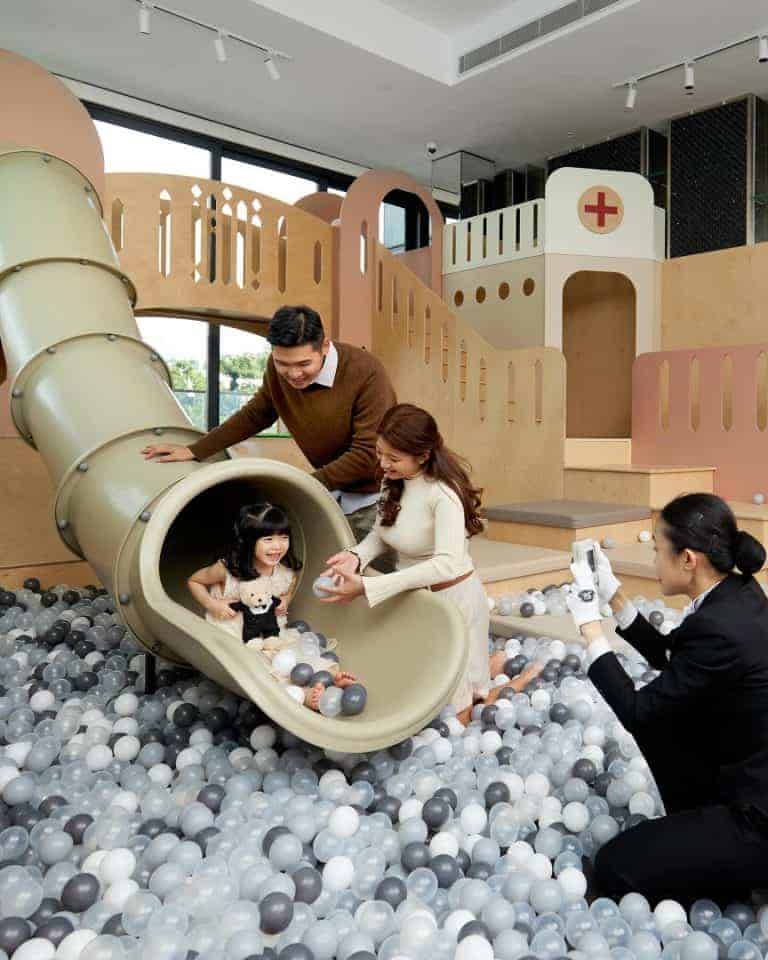
by Chong Jinn Xiung
Three Malaysian dads share how they’re showing up differently from the generation before them – with more presence, more partnership and a lot of quiet courage.

Looking back at my earliest memories of my father, I remember us in the garden at my grandmother’s house, playing football before dusk. Those were the moments I looked forward to most, because they were the only pockets of time I really had with him. The rest of his day was swallowed up by the office, late nights and long commutes. Watching him, I understood very early that providing for the family was his top priority – and that it came at the cost of being away from us.
Now that I’m a father myself, I’ve come to appreciate the sacrifices he made, even as I find myself in a similar position of having to provide and juggle work. The difference is that my job doesn’t end when work does. Beyond bringing home the proverbial bacon, I’m expected to play a far bigger role in the day‑to‑day lives of my children. Family dinners and bedtime routines are non‑negotiables, fiercely protected even on busy days. It’s something many of us have come to accept as part of modern fatherhood.
Our fathers’ generation were often cast in a single role: the breadwinner whose main duty was to “make a living”, while mothers handled most of the caregiving. Today, that script is changing. Fathers are called to be more present, more hands‑on, and more emotionally tuned in – not as heroes, but as equal partners at home.
What has changed about fatherhood in Malaysia between our fathers’ time and ours?
To try and answer that, I spoke to three Malaysian fathers at very different stages of the journey: Jonathan Chong, 42, who runs his family’s business and is a father of three; Bikesh Lakhmichand, 48, a venture capitalist and founder with an eight‑year‑old son; and Nic Ker, 36, who works in telecommunications and is a brand‑new dad to a three‑month‑old daughter. Their stories felt familiar in all the best (and hardest) ways.

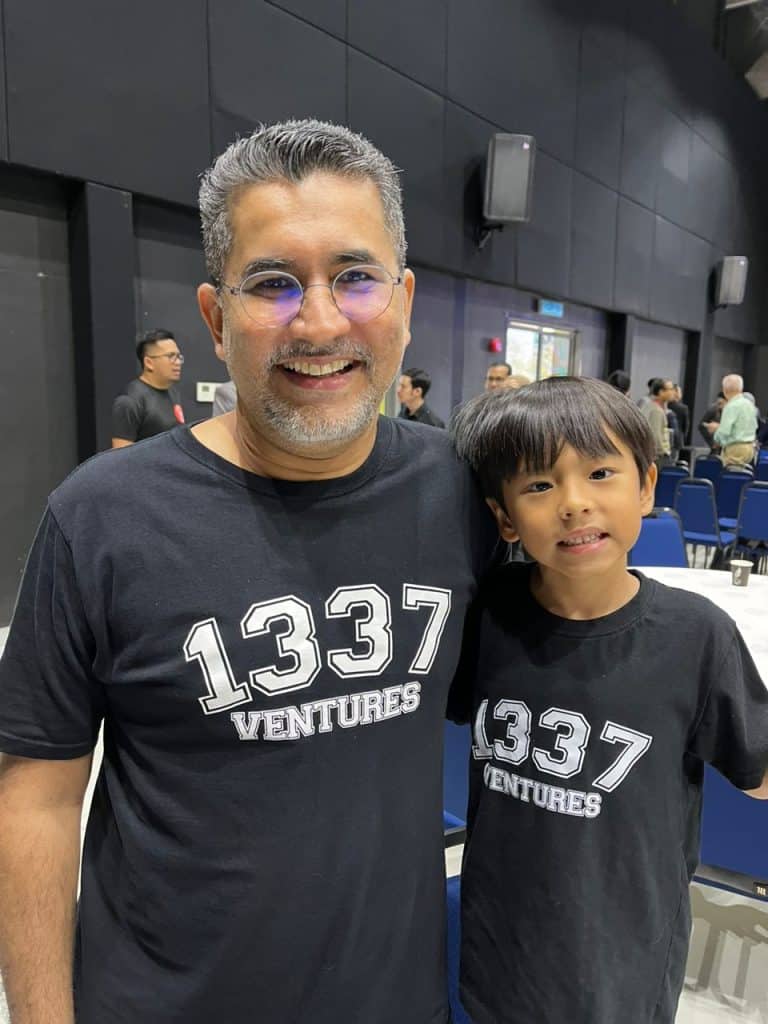

L-R: Jonathan Chong, Bikesh Lakhmichand and Nic Ker; with their respective families.
Then vs now: providers and partners
Across the three interviews, one thing is common: all of them grew up with traditional fathers who were providers first. Their dads focused mainly on work and were not as involved in the daily raising of their children.
Ker feels that generational gap sharply. “In my father’s generation, fathers would say ‘my wife is pregnant’,” he says. “These days, people my age would say ‘we are pregnant’ – that sums up a big shift.” Back then, being a good father meant providing financially. Now, providing is shared, and dads are expected to be emotionally present too.

Chong shares a similar story. His father was “very traditional” and often busy running the business. He did not change diapers and rarely attended school events like sports day. That is in stark contrast to Chong’s own journey today, where he makes it a point to be there to change his children’s diapers, puts them to bed and makes every attempt to attend their school events. “We’re expected to do these things now,” he reflects. “It doesn’t mean our fathers loved us any less. As modern dads, we’re called on to be more involved in the lives of our children.”
Modern dads aren’t just dragged into caregiving, either. Many actively reshape their lives around their kids. For Bikesh, the difference isn’t that you can’t pry yourself away from work – it’s that you don’t want to. “That choice – wanting to be there and then restructuring your life around that – is the big shift,” he says.
Showing up when it counts
Most fathers can’t be at every school event and still keep a job. Many parents know this ache intimately – it’s one of the quiet realities of parenting.
For Chong, running the family business six days a week is a given, but he draws a hard line: once he gets home, he is fully present with his children. He also blocks out Sunday as family day. His social life has largely disappeared, apart from the occasional pickleball session and meet‑up with friends, but he’s made peace with that. With 24 hours in a day and seven days in a week, he’s chosen where his time goes.
Bikesh recalls the time he missed an activity in his son’s school where parents were invited to build a volcano with their kids. It clashed with a day he was due to present a lecture to 20 startups. “I couldn’t postpone my work engagement,” he says. “I had to explain to my son that I couldn’t be there. He was understanding, but it still hurts because you want to be there for him. Sometimes you just have to work around it.”

For Ker, the memory of those early days is still very fresh. He took two weeks off work – combining paternity leave and annual leave – and wishes he could have taken three months to look after his newborn. To him, it is almost unthinkable that fathers in the past would go back to work the very next day after their child was born. He feels that in Malaysia, supportive policies for new parents still lag behind other countries, and that a lot depends on an individual’s manager and whether they are understanding of an individual’s family commitments.
Navigating the new mental load
Another big difference between our parents’ generation and ours is how we process information about “best practices” for raising children. In the past, our parents might have relied on a few books and their own elders. Today, thousands of online resources, reels and hot takes make it challenging to filter out what is truly relevant – and what fits the kind of parents we want to be.
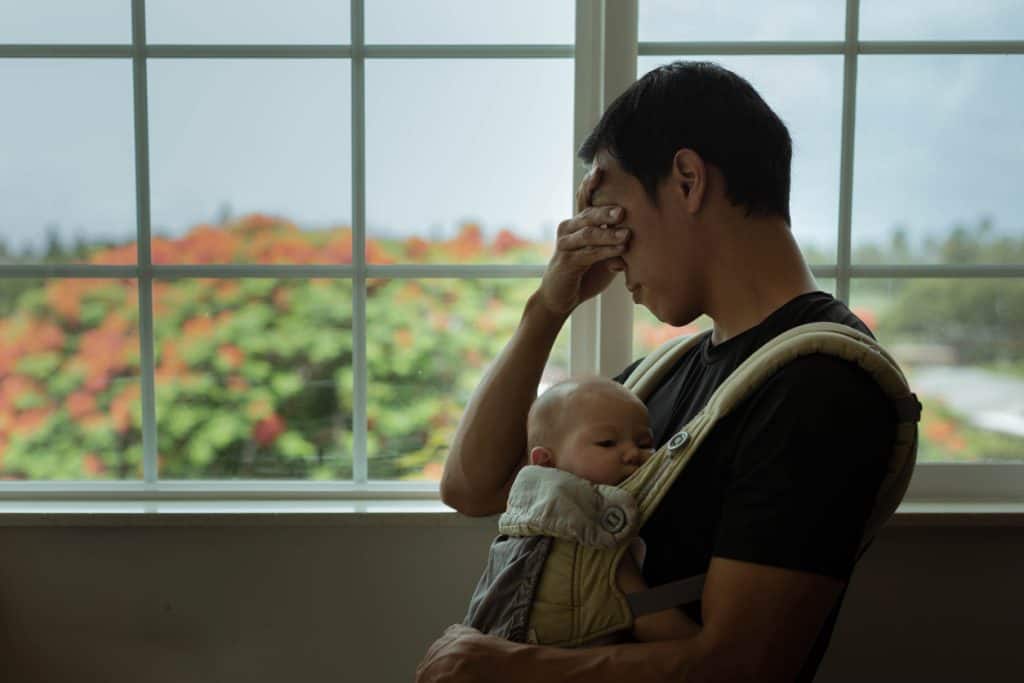
Ker contrasts how his parents followed simple rules like “don’t drink, don’t take drugs and avoid heaty food” during pregnancy, with the encyclopaedia of advice he and his wife encounter now: the best way to breastfeed, ingredients that are safe on a baby’s skin, what to eat and avoid, which gear to buy, how to prevent every possible condition. The hardest part of being a new dad, he says, isn’t the sleepless nights. It’s the anxiety of trying to do things “right”, and learning to filter out the mental noise. It got so overwhelming at one point that he took a break from Instagram during confinement, because the parenting content fed fear and guilt and led to analysis paralysis.
For Chong, all that information has also had a gentler side‑effect. His own hypothesis is that access to parenting books and online articles has made his generation “more informed and more patient”. “We don’t do corporal punishment,” he says. “Bringing out the rotan isn’t a thing in our household. When we need to correct a behaviour, we sit down and speak with the kids.”
Bikesh, meanwhile, thrives in today’s information‑centric, tech‑driven age. He has no fear of exposing his son to screens and fully embraces them. He and his son have worked on projects using AI and tech as creative tools – from building worlds in Minecraft to designing their own Dungeons and Dragons game, using AI to craft backstories and adventures. Where some parents see screens only as a threat, he is trying to model a more nuanced path: technology as a tool for creativity, problem solving and connection, not just passive consumption.
If you’ve ever closed an app because every parenting post made you feel like you were failing your child, you’re not alone.
What they hope their children will remember

At the end of the day, what matters most to these fathers is surprisingly simple: how their children will remember them one day.
For Chong, it isn’t about whether his kids remember the brands of schools they attended or the trophies they brought home. What he hopes they carry into adulthood is the sense of a father who showed up. He wants them to look back and see someone who genuinely tried his best to raise them as “good, decent people”. Even when he talks about mistakes, his focus is on repair: no decision is ever truly permanent, and “no matter what mistakes we make, it’s never too late.”
In Bikesh’s ideal picture, he is both dad and friend to his son – the safe person to laugh with, but also the one who sets boundaries, insists that homework gets done, and keeps nudging his son towards empathy and resilience. Through the way he parents, he is already passing on a founder’s mindset: try, fail, try again. Losing one Pokémon battle or stumbling on a school project doesn’t mean you’re “not good enough”; it just means you haven’t found the right strategy yet.
Ker, still only a few months into fatherhood, goes straight to the heart. What he wants most is for his daughter never to have to question whether she is “enough”. Growing up in an Asian context where love can sometimes feel tied to achievement, he is determined that her memories of him are soaked in unconditional acceptance and warmth. If he could send a message back to his younger self – and to other would‑be dads – it would be to overthink less and be more present: “Sooner rather than later,” he says, and “worry less.”
Listening to them, it’s hard not to turn the same question back on ourselves. Years from now, what will our children say about us? Will they remember the missed school events, or the nights we managed to make it home in time for dinner?
As I think back to that garden in my own childhood, and look at my boys around the table now, I know I won’t always get it right – none of us do. But like Jonathan, Bikesh and Nic, I’m hoping my sons will one day look back and remember that I was present in their lives, did my best to provide for them, and that, in our little corner of Malaysia, they were always enough.